Any one person or one company cannot create a new market. Markets are usually co-created by multiple competitors offering to satisfy a particular customer desire. Even the markets that seem to be dominated by one company usually have multiple credible competitors – Google has Bing and DuckDuckGo and Facebook has Twitter, TikTok and Snapchat.
Oligopolies exist because the first company to launch a product is rarely a home-run in terms of getting the market-product fit right. In fact, the innovative company ends up producing evidence for demand in the market for fast followers. ...Read the entire post →
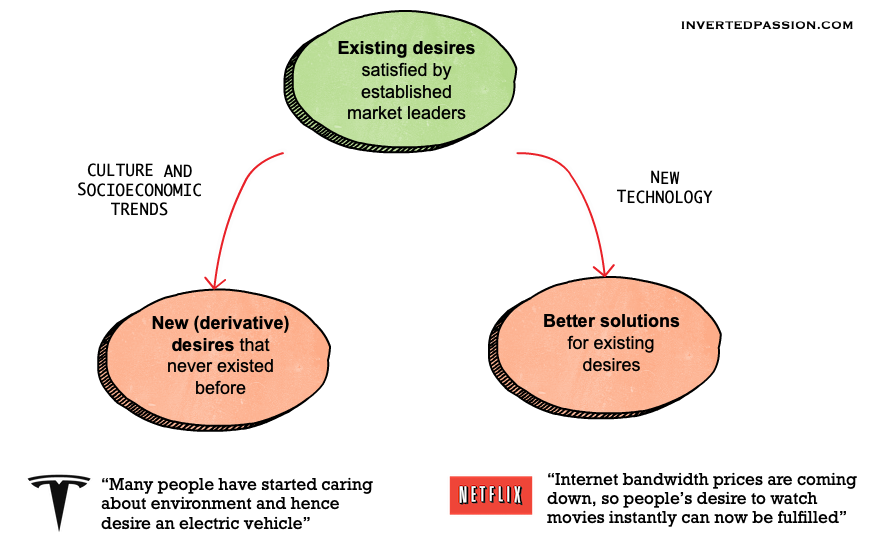
It’s near impossible for a product to create a new desire in customers all by itself. No single product creates a market. What usually happens is that multiple environmental, political, economic, social, and technological factors come together to delicately and gradually shape what customers desire, which then creates an opening for new products to address such evolved expectations.
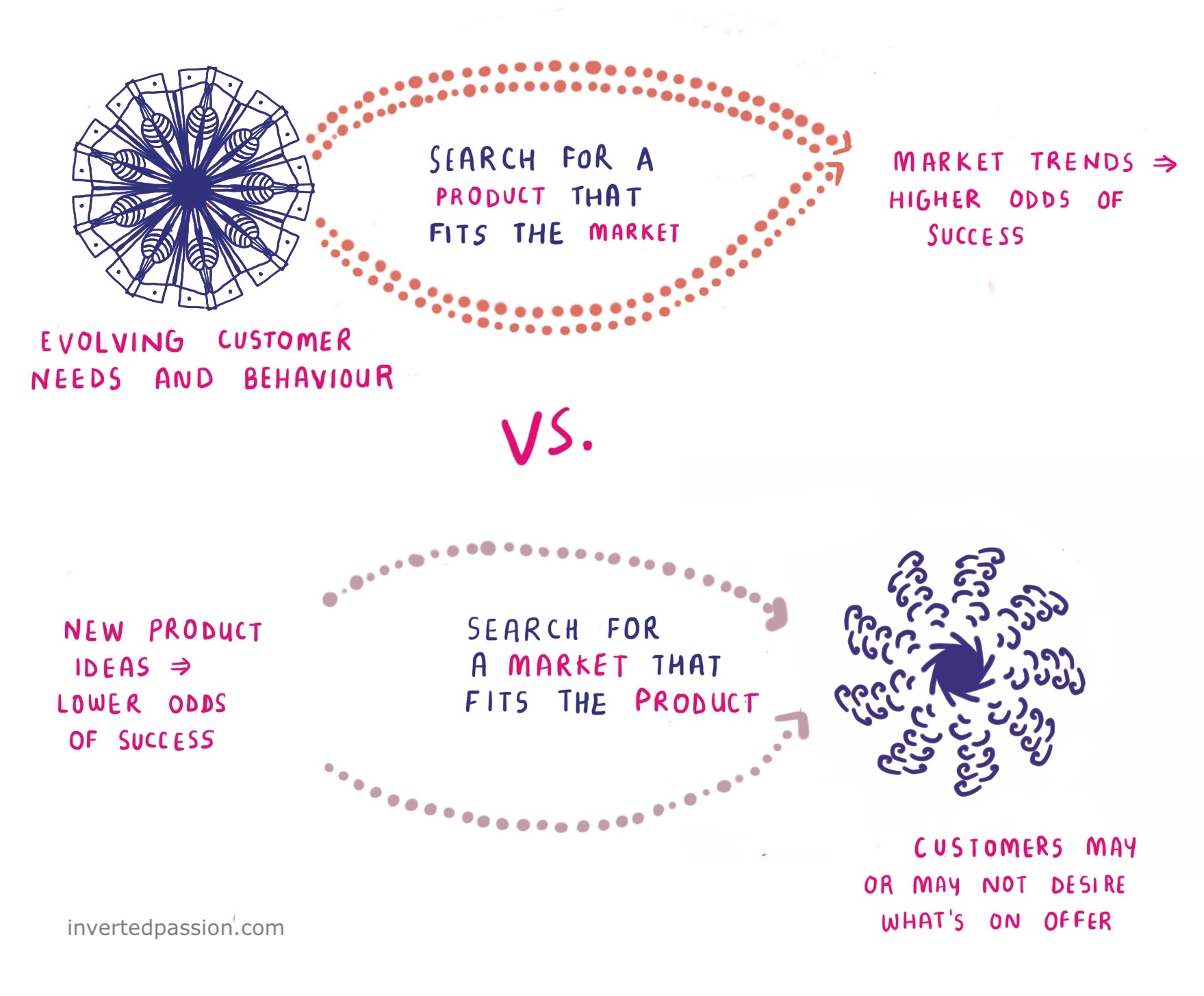
Go outward-in, not inward-out– illustrated by Aakanksha Gaur
The million dollar question is: how do you discover these evolving trends?
The best way to discover these unambiguous market trends is to look for instances where customers are innovating by themselves by modifying or re-imagining existing products. ...Read the entire post →
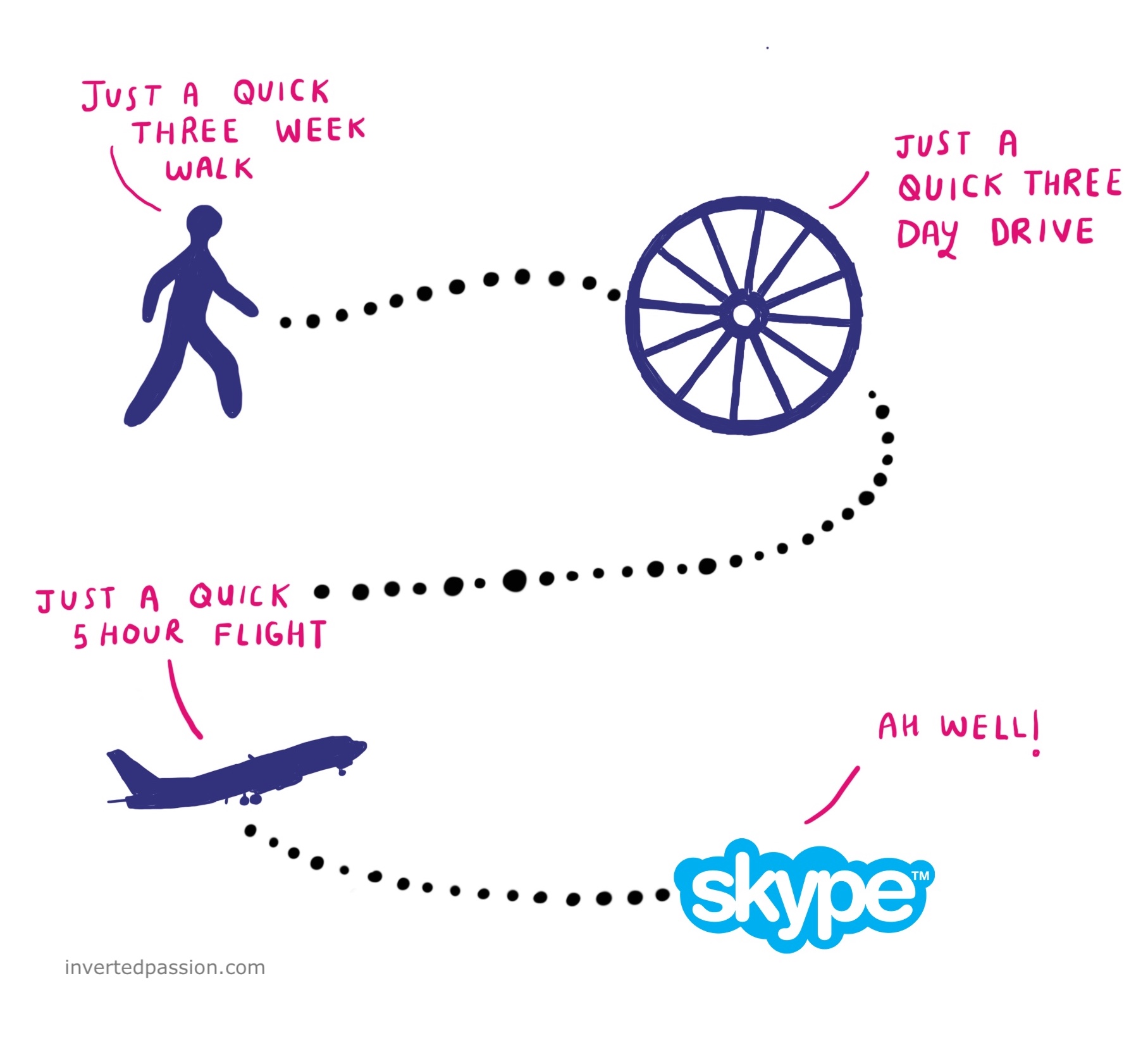
It’s important to clearly distinguish between what people desire and how they fulfill them. Our desires usually remain the same, but methods of fulfillment keep changing. For example, the desire to have good oral hygiene can be fulfilled in multiple ways: toothbrushes, mouth wash, or even crunchy foods like carrots that help clean mouth as we chew on them.
One desire, multiple solutions – illustrated by Aakanksha Gaur
What people care about is their desires and not how they’re currently fulfilling them. If a better way to fulfill their desire comes along, they’ll switch to it in a jiffy. This is why innovative startups take over entrenched incumbents. People really have no loyalty to solutions. ...Read the entire post →
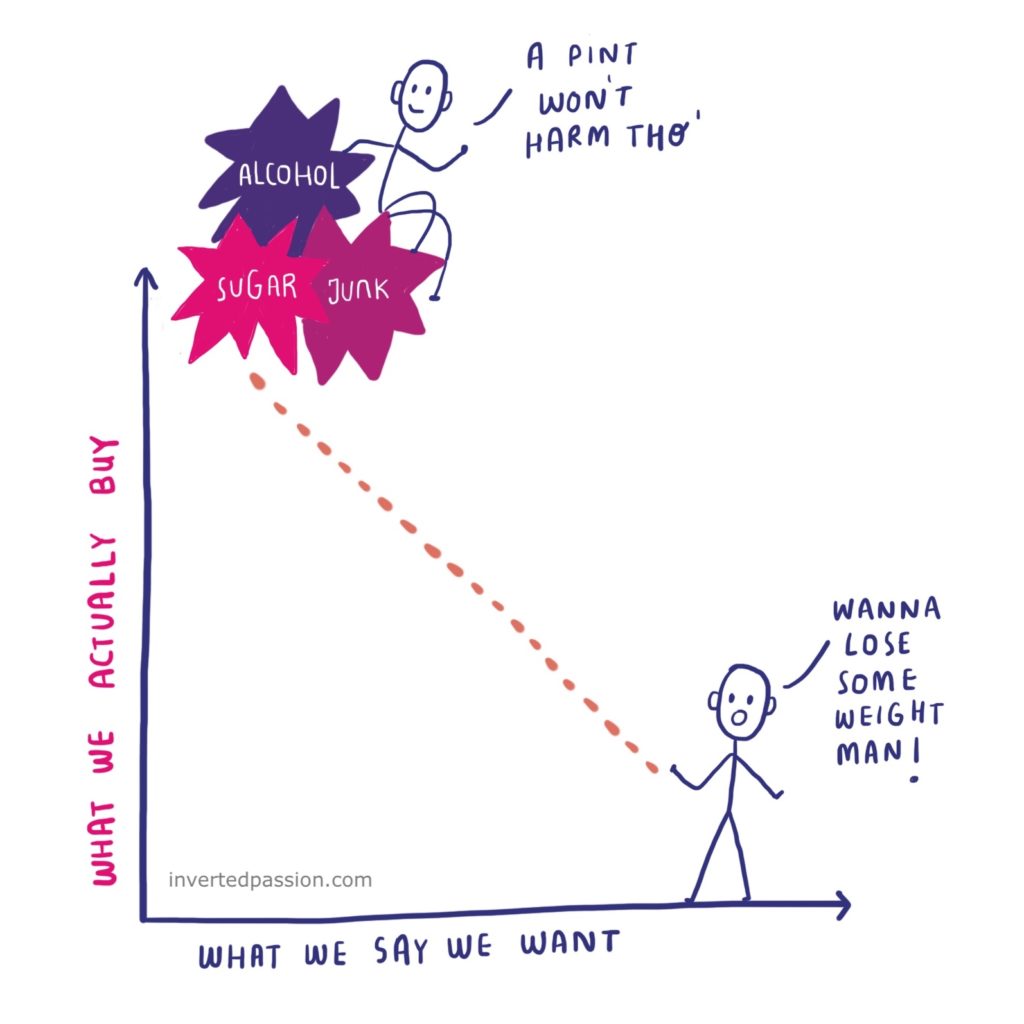
Yet days later they find themselves smoking or drinking again. How many times your friends have told you that they want to get fitter, only to later discover them ordering a large, cheesy pizza? We, humans, are notorious for saying something but doing something else. This tendency is troublesome for entrepreneurs because when people express their desire for something, it’s a mistake to take that on its face value.
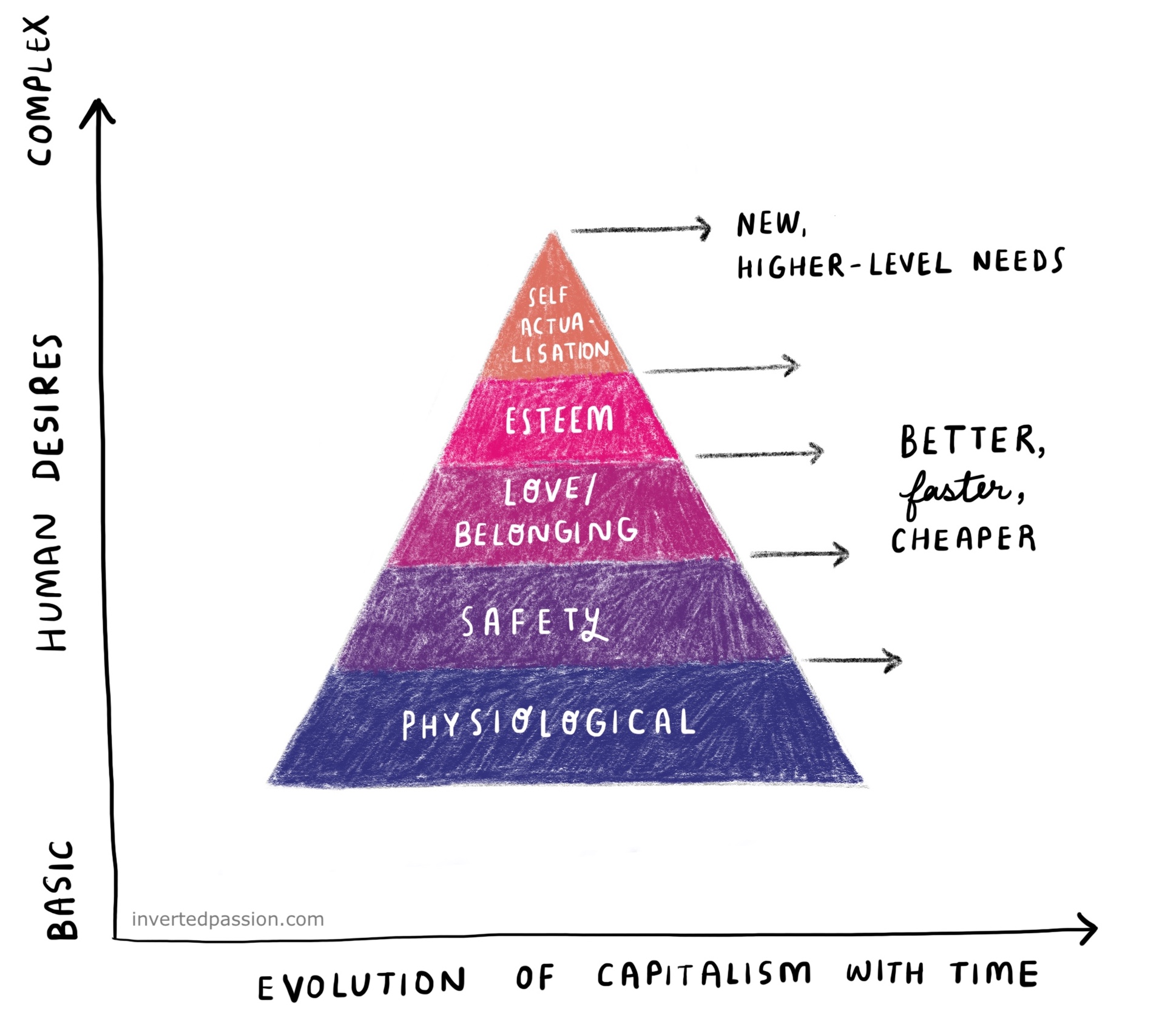
Human desires have been shaped by millions of years of evolutionary programming and therefore haven’t changed much during the course of history. In fact, the most fundamental desires of food, sex, health and security have remained the same as they were for our hunter-gatherer ancestors.
The Real Maslow’s Pyramid, illustrated by Aakanksha Gaur
Sure, as culture evolves, new derivative desires emerge to help fulfil our basic desires in a better way. For example, the desire for transportation is derived from the desire for doing business with far flung areas which in turn is derived from the desire for profit which itself is derived from our desire to feel safe by hoarding resources for the rainy days. ...Read the entire post →
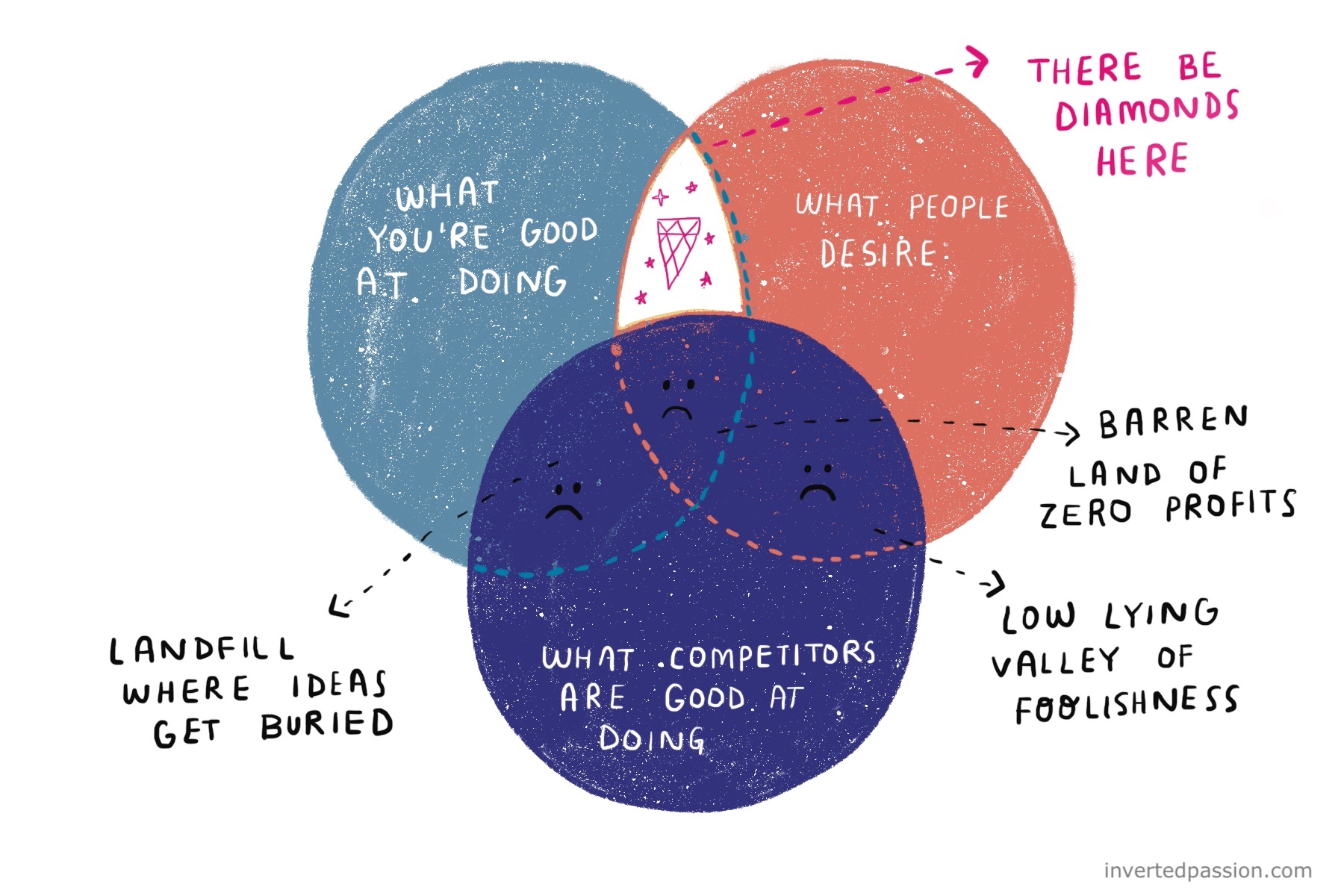
You create value when you fulfill the unmet desires of people better than the alternatives they have (from competitors).
The Valley of Value Creation, illustrated by Aakanksha Gaur
The idea that capitalism rewards things that are rare and valuable was proposed by Scott Adams in his essay on career advice where he recommended readers to master various skills until no one else has the mix that you have. That’s great advice.
The same applies to startups too as the only way you succeed in the market if you provide something that’s rare and valuable to customers. For example, Facebook succeeded because it fulfilled the desire of college students to know who from their class they could date (the valuable part). Before Facebook, social networks weren’t limited to a particular college and hence it was difficult to find people who are in the same class and are also looking for a relationship. By limiting signups initially to Harvard University, Facebook created a destination for dating. No other social network did this at that point in time (the rare part). Notice that had Facebook done only the valuable part or only the rare part, it would have not succeeded. ...Read the entire post →