This essay is part of the series in which I talk about my learnings and insights building a habit coaching app (Nintee) in 2024. It didn’t ultimately work out because an app has marginal influence in a human’s life (v/s that of friends, family, culture and immediate environment). Most apps that work in the category operate like gyms (charge upfront when the motivation is high, and be okay with high churn). I had raised VC funding for it and later it became clear to me that this wouldn’t be a VC scale business, so I shut it down and returned the remaining funding. Hope the insights learned along the way would turn out to be valuable to others. ...
All posts in Mental Models
Science of habit building
This essay is part of the series in which I talk about my learnings and insights building a habit coaching app (Nintee) in 2024. It didn’t ultimately work out because an app has marginal influence in a human’s life (v/s that of friends, family, culture and immediate environment). Most apps that work in the category operate like gyms (charge upfront when the motivation is high, and be okay with high churn). I had raised VC funding for it and later it became clear to me that this wouldn’t be a VC scale business, so I shut it down and returned the remaining funding. Hope the insights learned along the way would turn out to be valuable to others. ...
Usefulness grounds truth
Are LLMs intelligent?
Debates on this question often, but not always, devolve into debates on what LLMs can or cannot do. To a limited extent, the original question is useful because it creates an opening for people to go into specifics. But, beyond that initial use, the question quickly empties itself because (obviously) the answer to the question if X is intelligence depends on how you define intelligence (and how you define X).
Even though it is clear that words are inherently empty, internet is full of such debates. People focus on syntax, when semantics is what runs the world. ...
Games are problems people pay to solve
Good definitions are powerful. Lately, while reading The Art of Game Design, it became clear to me that the author’s definition of games makes a lot of sense. He defines games as problems that people pay to solve with either their time or money.
Unlike movies or books, games are not passive: they require an active participation and in that sense, they’re problems to be solved. And the fact that we willingly pay (with time or money) to solve those problems is fascinating.
Even though I’m not a gamer, I’m building a consumer startup in the behavior change domain and that’s pushing me to study games. Specifically, I’m interested in exploring what is that about great games that people will spend many hundreds of hours trying to master them, while most consumer experiences (including courses purchased or apps installed) have a ~90% churn of users on day 1 itself. ...
Wealth is not money, it’s the things we use money for
As an entrepreneur, money is obviously a massive motivation for why you’re doing what you’re doing. However, it’s essential to understand that money is not wealth.
Wealth is stuff we want and by that logic, people can be wealthy even if they don’t have a lot of money. In fact, because wealth is anything that is directly desired and attained, even animals and insects can be wealthy.
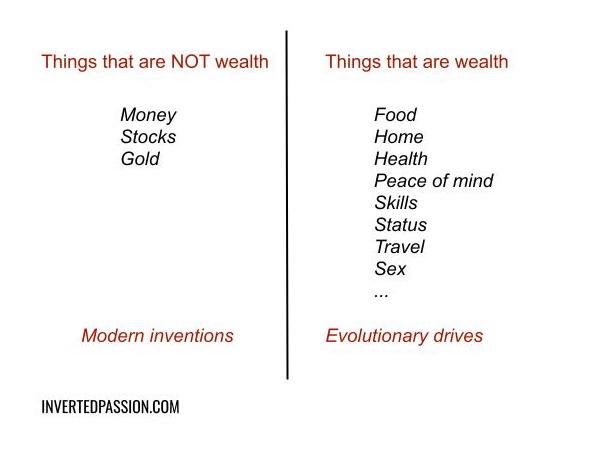
The reason money is so popular because it allows us to acquire (certain types of) wealth. Money will be worthless if what you desire cannot be bought, or if there’s nothing you desire. Because most of what we desire can be had for cheap in modern society, the importance of money in our society is reinforced by people who are excessively driven by status. ...
You can only succeed if you know how you can fail
We want to be successful with our decisions. Even though failure is often glamorized, nobody wants it on purpose. Everyone wishes to be successful when they’re starting a company, launching a product, hiring a leader or even while buying a house.
It may sound obvious, but the bedrock of good decisions is defining what good means before you execute on a decision.
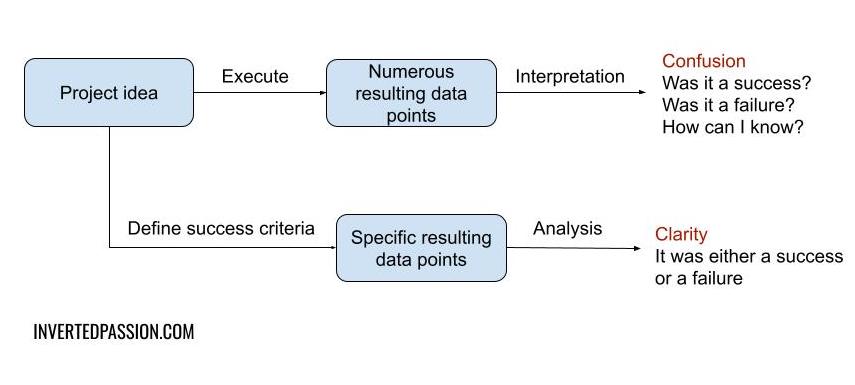
Here’s why it’s important to define a clear, objective and unambiguous criteria before making any decision. First, without a commitment to an objective criterion, your brain will latch onto your how you’re feeling to decide whether the outcome of the project is good or bad. These emotions are influenced by all sorts of subconscious cognitive biases. In the end, you will end up picking data points that support your emotional inclination while ignoring the other data points. ...
Startups live and die in a multidimensional landscape
Startups are like heat seeking missiles, except they seek profit and live in a multidimensional world where one mistake means missing the target by a mile.
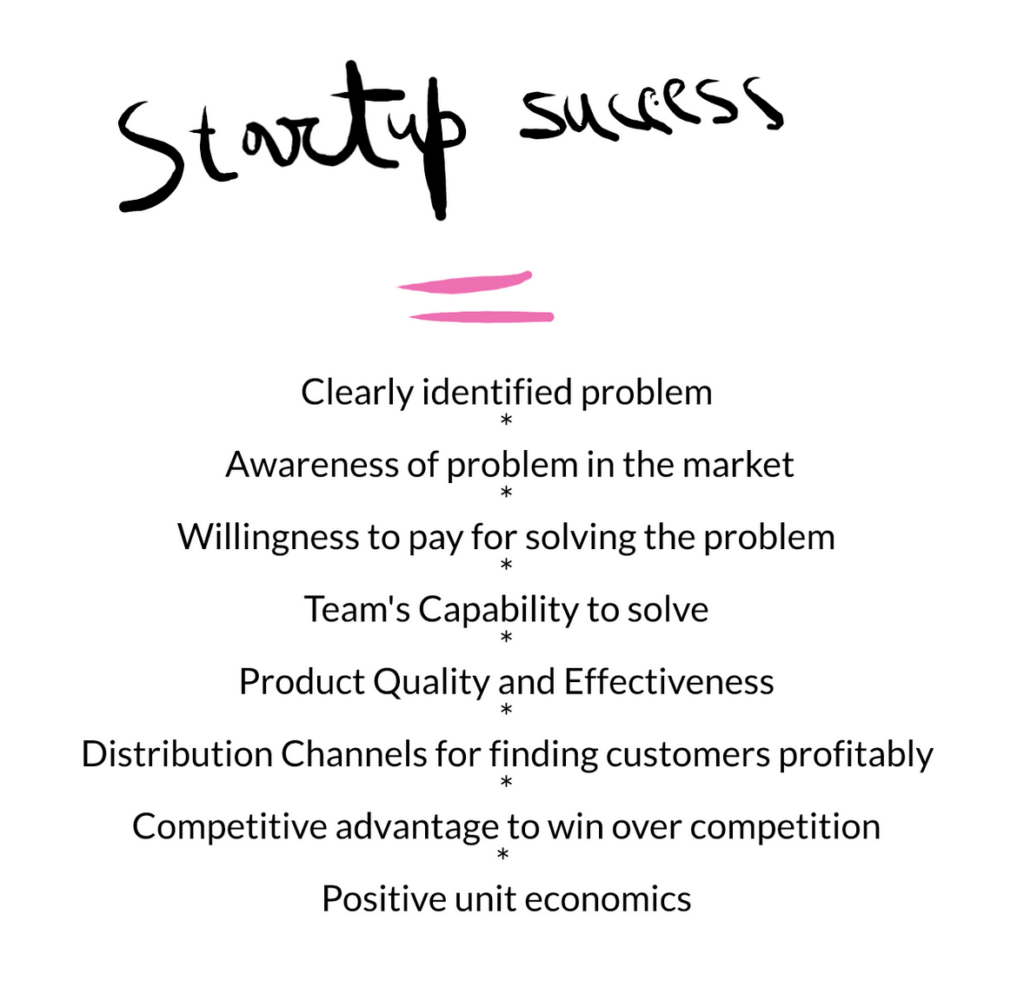
Startups are hard because they require several things to go right simultaneously. It’s not sufficient to get one thing right, an entrepreneur must solve this multidimensional puzzle perfectly.
There are many smaller but important dimensions, but here are the biggest ones that need to be just right for a business to succeed:
- Is the problem you’re solving a real one, or is it just in your head?
- Even if the problem is real, are people actively looking to solve it? There are many problems that are merely inconveniences that not many people bother to solve. Is your problem one of that?
- Even if the problem has a high enough priority and that people are looking to solve it, are they willing to pay for it? There are many problems which people want a solution for, but they’d not pay anything or much for it because they’re habituated to expect a solution for free. For example, news and information is valuable to people, but people have come to expect to get it for free on the Internet.
- Even if the problem is real and people are willing to pay for it, do you have the required capabilities to develop a solution? Some problems may have challenging solutions that are not easy to execute.
- Even if you’re able to solve a problem that people are willing to pay for it, is there a way you can profitably market your offering to them? Marketing costs money, and often potential customers may not be aggregated at one place for you to profitably market to them.
- Even if you’ve found a distribution channel, does your business have any lasting competitive advantage that will prevent a bigger competitor or another startup from snatching your customers?
- Lastly, assuming you do everything right, will you deliver positive unit economics? Your business will struggle unless you’re predictably generating cash flow.
Remember: because so many things have to go right, most successful entrepreneurs either get lucky on all these aspects or they have a unique insight or expertise about one of the above aspects that others don’t have. ...
Think from first principles before you Google (or ask ChatGPT)
Like most technologies, search engines are both good and bad at the same time. They’re good because they open up vast resources of information. Today, our ability to know things instantly would seem like magic to previous generations. At the same time, precisely because searching is so easy, we’ve become habitual for googling for each little problem or doubt in our head.
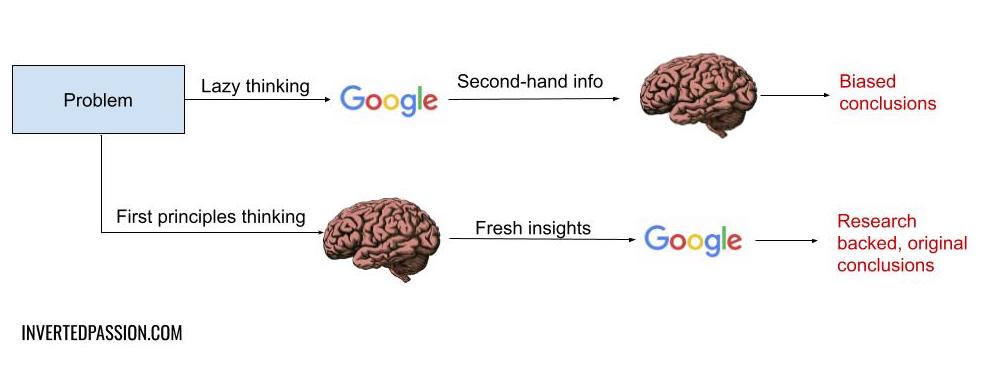
In programming circles, coding by Googling is popular, but this is equally true for all professions. Because search results are so damn fast and convenient, we are now slowly getting wired to automatically and subconsciously Google any unresolved query in our head. This automatic reliance on search engines is dangerous because it is replacing our capacity for original thinking with second-hand information written by others. ...
Stop assuming that your customers want things that you want
Mind projection fallacy happens when we assume that most other people are like us. It’s an error to assume that they have similar desires and fears towards things as we do.
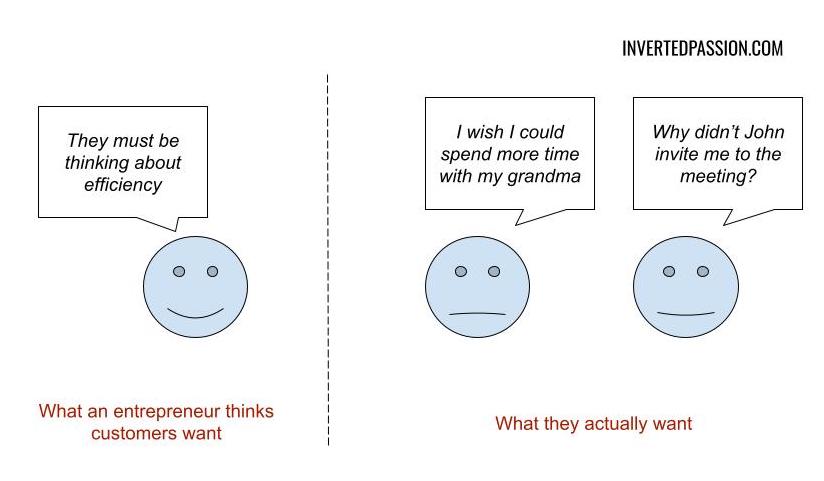
Normally, this is not such a big issue. The worst that can happen in most cases is perhaps an exchange of incredulous looks (for example, when a cricket fan encounters a non-cricket who doesn’t know who Sachin Tendulkar is).
But for entrepreneurs, the mind projection fallacy is dangerous because it means they can end up working on the wrong problem. ...
Ask people what they did, not what they will do
When it comes to our life and decisions, we’re optimistic rationalizers. Every New Year’s Eve, we take resolutions that are grounded in perfectly valid reasons – reducing weight, quitting cigarettes, reading more books and so on. If someone asks why we want to read books, we can confidently blurt out that it will expand our worldview.
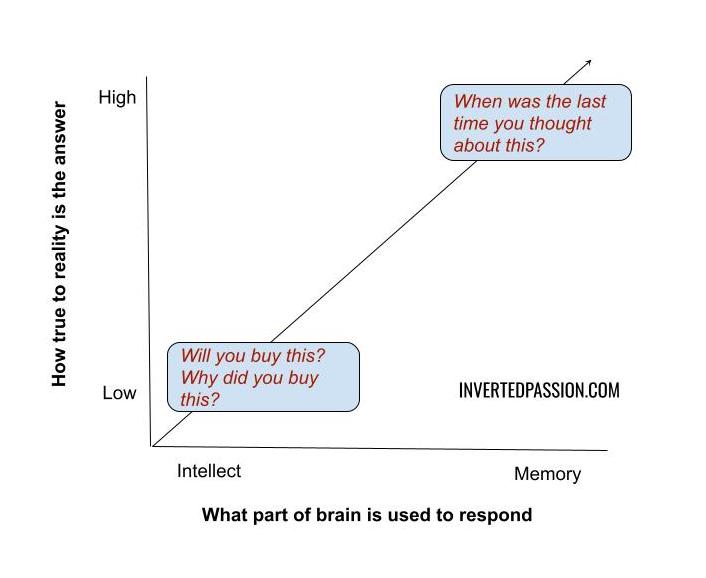
Fast-forward a couple of weeks in the new year, and we’re often back to our old ways. It’s spectacular that even when we quit our yearly resolution within weeks, we always have good reasons for why we abandoned our goals. (We’d rarely acknowledge that we’re lazy or are addicted to cigarettes.) ...